

A car shock absorber is a critical component of the vehicle's suspension system, primarily designed to suppress the oscillations and road impacts that occur after the suspension springs absorb a shock. It does not support the vehicle's weight; instead, it works in tandem with the springs to ensure a smooth ride.
What are its main functions?
Suppressing bounce: When a vehicle drives over potholes or bumps, the springs absorb the impact but tend to oscillate (compress and rebound repeatedly); shock absorbers quickly dissipate this energy, preventing the vehicle body from rocking up and down like a boat.
Improving comfort: By dampening vibrations, they provide a smoother ride for passengers and reduce motion sickness.
Ensuring handling safety: They maintain tire contact with the road—preventing the tires from lifting off during cornering or driving over bumps—thereby improving grip and tracking stability.
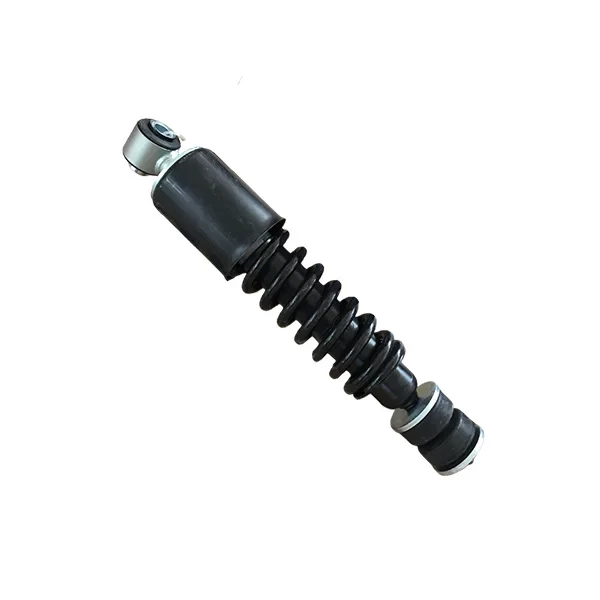
How does it work?
Energy conversion: The unit is typically filled with fluid; when there is relative movement between the vehicle body and the wheels, a piston moves through this fluid.
Generating resistance: As the fluid flows through narrow valve orifices, it creates frictional resistance (damping), converting the mechanical energy of the vibration into heat and dissipating it.
Bidirectional action: It generates damping force during both the compression stroke (wheel moving toward the body) and the rebound/extension stroke (wheel moving away from the body), thereby suppressing the spring's reciprocating motion.
What are the effects of damage?
Vehicle bouncing: If shock absorbers fail, the vehicle body will continue to bounce and oscillate after driving over speed bumps or potholes.
Deteriorated handling: Steering response becomes sluggish, braking distances may increase, and tire wear accelerates.
Increased noise: Internal component wear or fluid leaks may result in metallic clunking sounds or visible signs of oil leakage during operation.